MONTMIRAIL
Gaston Eve dans les Forces Françaises Libres. (Page anglo-français)
© Copyright / Droits d'auteur 2000 Gaston Eve
Dernière mise à jour: 20 juillet 2024. Le site Web de la Deuxième Compagnie de Chars est sécurisé par HTTPS à "https://www.2e-compagnie-de-chars.org/".
Français.
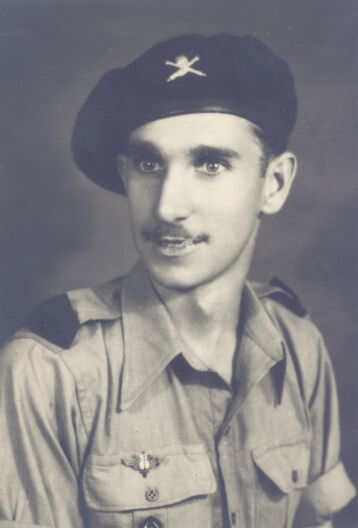
Mon père fut un homme d'une grande douceur. Il m'a toujours étonné penser qu'il s'était offert pour combattre dans une guerre si sanglante. Par conséquent, un fois je lui ai demandé pourquoi il s'était proposé pour servir sous De Gaulle avec les Français Libres. Il m'a dit simplement «Parce que j'adore la France!»
Il était toujours réticent au sujet de la deuxième guerre mondiale. Pendant mon enfance il a découragé des personnes d'acheter à ses fils des jouets militaires, soldats etc. Il a toujours méprisé les films de guerre de Hollywood. Ma mère m'a dit que, pendant les 10 ans suivants la fin de la guerre, papa se tournait et se retournait toute la nuit dans des cauchemars de ses expériences. Souvent papa est devenu si agité dans son rêve qu'il se donnait des coups de pied et poussait maman hors du lit. Souvent elle se levait le matin avec sa jambe couverte de bleus! Sa voix était toujours douce. Il était incapable d'éclats de voix parce que ses cordes vocales avaient été paralysées par l'épuisement prolongé résultant de deux ans de dysenterie pendant la guerre. Il n'a jamais regagné la pleine utilisation de sa voix.
Au début des années 80, à la suite des réunions avec ses camarades de la France Libre, il a commencé à rendre compte de son expérience de la guerre. Puis dans environs de 1990, je lui ai demandé d'écrire un contour chronologique de son voyage.
Les 2 premiers liens sur le menu de la page décrivent l'unité de chars de Gaston. À gauche, la Deuxième Compagnie de Chars 501 RCC, à droite, c'est le prédécesseur, la Deuxième Compagnie Autonome de Chars. Dessous ça (Le "Journal de la Guerre") est le contour chronologique de mon père. Les pages suivantes (numérotés) ont été assemblées à partir d'un assortiment d'ébauches, de comptes écrits, de nombreuses chutes de notes trouvées après sa mort. Un lot de notes de mon père étaient, très gentiment, retourné par Laurent Fournier. Tout ça forment un plus longue et détaillé compte. L'année dernière j'ai trouvé son agenda de poche 1944 (dans un piteux état). J'ai récupéré des informations de cette (je travaille toujours sur lui) ce qui m'a permis de remplir plus d'informations à la fin de la guerre avec ses propres paroles. Mais une grande partie de l'histoire de mon père manquent concernant sa formation pour et débarquement en Normandie. Très aimablement, Émile et Mary Fray m'a donné la permission d'utiliser une partie de son récit de ses expériences de guerre pour rapiécer le trou. Autre que durant leurs maladies, Émile et Gaston voyagé toute la guerre ensemble, dans l'amitié et, dans la même Section de Chars. Pour cette raison, le compte d'Émile est tout à fait pertinent. Cela complète le tableau d'un voyage d'un homme de chars.
Parce que 10% des comptes étaient en anglais, j'ai fait de mon mieux pour traduire et d'obtenir un récit français complet. Beaucoup de mercis à Sandrine Trosino de corriger le plus mauvais de mes erreurs dans ma traduction. Je vous demande pardon pour les erreurs restant et le pauvre niveau de mon français. Sauf pour l'occasionnel "et", "aussi" ou pour les liaisons des phrases des deux récits différents, (et la section écrite par Émile) ce sont toutes ses propres paroles.
Elles enregistrent les émotions en temps de guerre. Aucune offense n'a été prévue. Il y a bien longtemps, il a mis sa rancoeur envers les collaborateurs français de côté. Parfois l'histoire est tout à fait franche mais, je n'ai édité aucune de ces opinions. Je n'ai pas édité l'histoire pour la rendre plus passionnante. Une bonne partie de l'histoire peut sembler ennuyeuse. Vraiment, c'est la guerre, 95% d'ennui et 5% de peur. Parfois il semble obsédé par la qualité de son nourriture, mais il a souffert deux ans de la dysenterie. Il y a de tout dans l'histoire.
J'ai accompagné l'histoire avec certaines de ses photos. Évidemment elles ont été prises pendant des intervalles paisibles. Un grand merci à Duncan Grant, une photographique technicien écossais, qui numérisée de nombreux négatifs et nettoyées et traitées les images pour moi. Les notes des textes placés dans des parenthèses carrées [ ] sont des commentaires explicatifs écrits par moi, Marc Eve, le plus jeune fils de Gaston. Quelques notes de fond en général sur la guerre, aussi par moi, peuvent être trouvées au-dessus de chaque page. Les opinions exprimées sont les miennes.
Le badge Français Libre en haut de cette page est un patch de l'épaule F.N.F.L. Il est n'est pas tout à fait approprié pour un site au sujet de chars, mais ce badge appartient à un frère de Gaston. George Eve suivi l'exemple de mon père et, âgée de seulement dix-sept, falsifié son âge et inscrit à la Forces Navales Françaises Libres (FNFL). Il a siégé au devoir escorter les convois sur la Renoncule et, L'Aventure. Je n'ai pas d'autres informations sur lui. Je laisse le badge ici, affichés sur la page d'index comme un petit hommage à mon brave oncle.
Si vous pouvez trouver une copie je recommande la livre "L'Odyssée de la Deuxième Compagnie de Chars" par général de Witasse, publié par Éditions Lyonnaises D'Art et D'Histoire. C'est un témoignage merveilleux.
English.
Our father was a very gentle person. I once asked him why, considering that he was in a reserved occupation and in relative safety in England, he had volunteered for the Free French. He simply replied "Because I loved France!"
He was always reticent about World War 2. During our childhood he discouraged people buying his sons military toys, soldiers etc. He particularly despised Hollywood style war movies. Our mother would tell us how at night, for about 10 years following the end of the war, Dad would toss and turn and kick out all night long in nightmares of those experiences. Often he became so agitated in his dreams that he would kick and shove Mum right out of the bed. She would rise in the morning with her legs bruised all over! Our father's voice was always gentle. He was incapable of shouting because his vocal chords remained partially paralysed from the prolonged exhaustion resulting from suffering dysentery over two years of the war.
In the early 1980's, following reunions with his comrades from the Free French, he began writing down his war experiences. In about 1990 I asked him to write a chronological outline of his journey.
The top 2 links on the page menu describe Gaston's unit, left, the Second Tank Company of 501 RCC, right, it's predecessor the Second Autonomous Tank Company. The first link on the English menu below that is "Gaston's War Diary," the brief outline he sent me. The numbered pages were assembled from 2 detailed accounts he sent me in English (Grussenheim and Obersalzberg), over 150 pages of notes in French found after he died and a dozen pages of English on the Paris Liberation very kindly sent me by the French author Laurent Fournier. I translated then joined them, omiting duplicated parts of narrative but flying in a paragraph if it had extra information.
Unfortunately within the 150 pages of continuous French narrative there were gaps. Page numbers showed what was missing, 3 pages from the Sabratha batch, 18 covering training in Yorkshire and first week in Normandy. This narrative stopped entirely after Grussenheim. I think his original intent was simply to remember Louis Michard, his platoon commander. Louis died at Grussenheim so I think Gaston felt that the story ended there. Other than the detailed Obersalzberg account he sent me, I was left with only a few rough notes and a couple of his letters for the last few months. However last year I found his 1944 pocket diary (in a sorry state). I've recovered a fair bit from that (still a work in progress) which allowed me to fill in more information at the end of war with some of his actual words.
Regarding the gap around the Normandy landings Émile and Mary Fray very kindly gave me permission to use a section of Émile's account of his war experiences to patch it. Apart from their bouts of illness, Émile and Gaston travelled the entire war together as friends in the same platoon. So Émile's segment is entirely relevant, narrated naturally from his individual perspective. That completes the picture of a tanker's journey.
Apart from the occasional "and" or "also" used to allow one draft to augment another (and Émile Fray's segment) these are all Gaston's own words translated by me into English. I haven't edited the story for the exciting bits and his intention was never to glorify war. Much will seem very tedious. That's part of war, it really is 95% boredom and 5% terror, so I left it all in. A couple of points are left out where he described in particular detail the bodies of his fallen comrades. They were perhaps written by way of autopsy with the other survivors and I'm sure weren"t intended for publication. He may sometimes seem to harp on about food quality. If you suffered 2 years of dysentery, you would be deeply concerned about your nourishment.
I've accompanied the story with some of his photos. Obviously they were taken during peaceful intervals. A big thank you to Duncan Grant, a very kind Scottish photographic technician who scanned and digitally processed many of my dad's negatives for me. Also thanks to Goeff Walden for helping me identify the locations of several of Gaston's photos of the Obersalzberg. The in-text notes placed within square [ ] brackets and general background notes at the top of some of the pages are written by myself, Marc Eve, Gaston's youngest son. The opinions expressed in them are my own. Any errors in the translation are of course my fault.
The Free French badge at top of this page was scanned from a Free French Navy shoulder patch. While not relevant to a site about tanks, it is in fact Gaston's brother George Eve's patch. George, at just seventeen, falsified his age and signed up for the Free French Navy. He served on Atlantic convoy escort duties on La Renoncule and L'Aventure. I remember my father saying George was twice sunk and landed in the chilly North Atlantic waters yet survived, but I've no other information on George's war so leave the emblem here as a tiny tribute to a brave uncle.
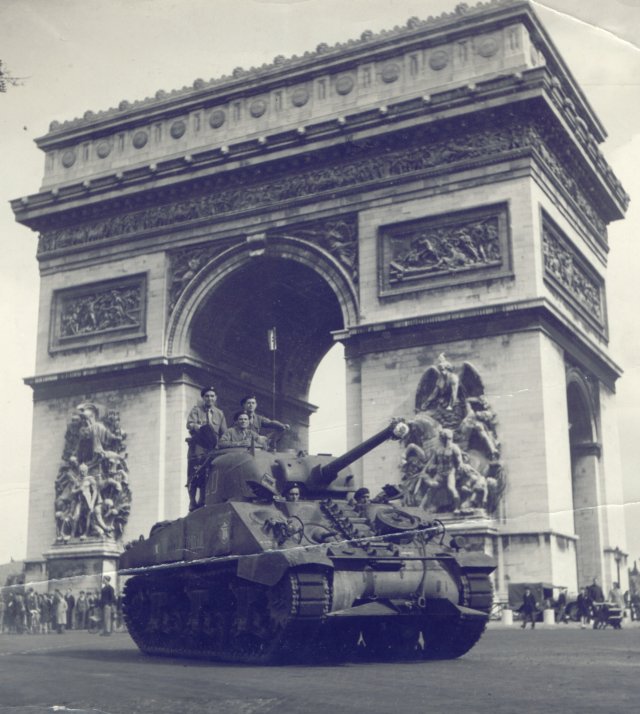
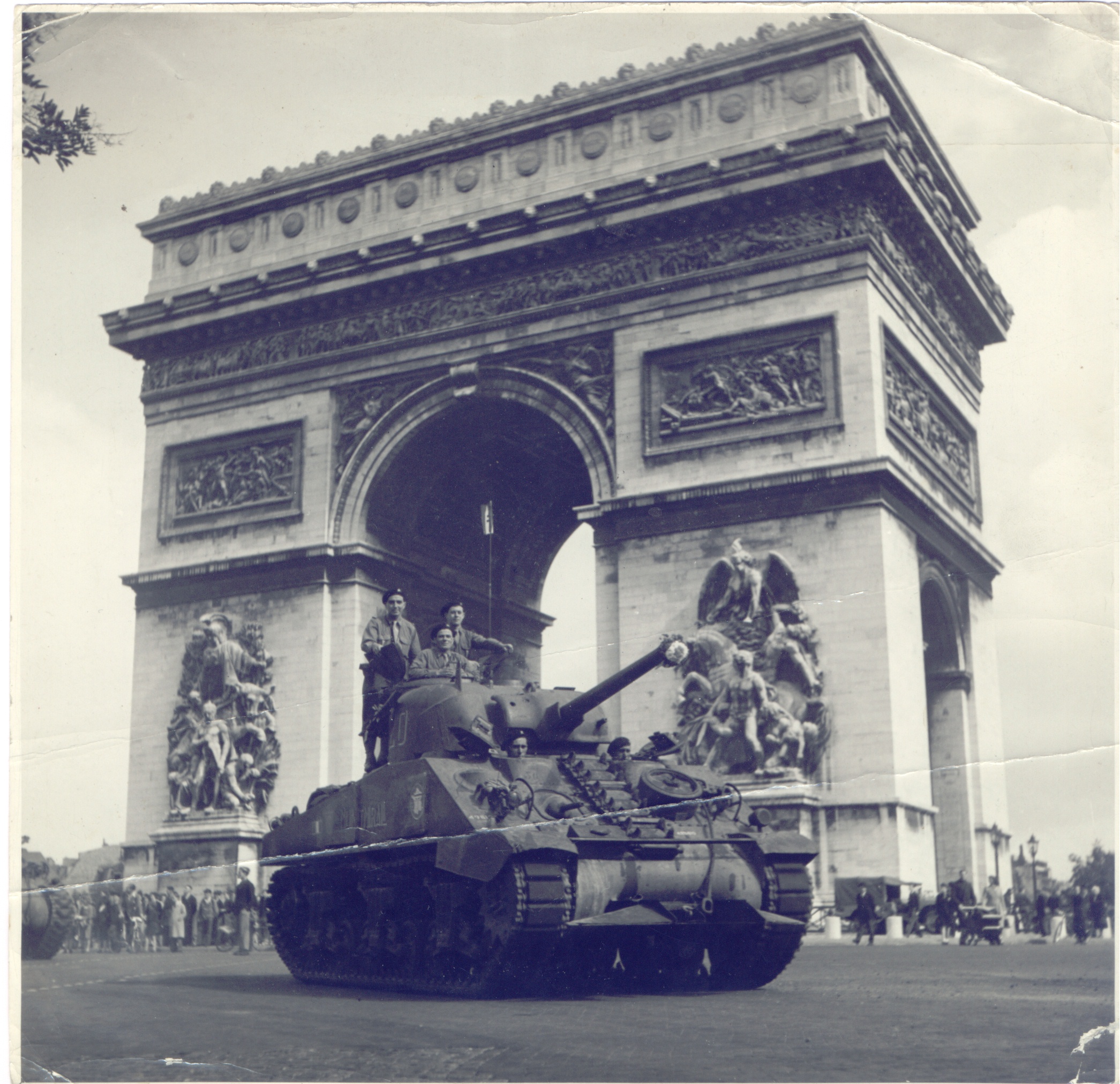
Gaston Eve conduisant le char Montmirail autour l'Arc de Triomphe, Paris prêt à commencer son défilé de victoire au Champs Elysée. Sur la tourelle, Lt Louis Michard chef de char et Paul Lhopital, chargeur. Dans la tourelle, Etienne Florkowski Tireur. Co-pilote Marc Casanova. Août 1944.
Gaston Eve driving Montmirail around the Arc de Triomphe Paris commencing its victory parade down the Champs Elysée, August 1944. On the turret left, Lt Louis Michard, right, Paul Lhopital, loader. In the turret, Etienne Florkowski, Gunner. Co-driver was Marc Casanova.
Liens français:
(http://www.balmoralgreen.com/) Voir le restauration du char Montereau ici en image et en video, et d'Arcis-sur-Aube en image: Merveilleux!
(http://www.thirdreichruins.com/) Un superbe guide des bâtiments et de l'architecture du Troisième Reich.
(http://perso.orange.fr/stephane.delogu/division-leclerc.html) Un guide très complet sur l'histoire de la Bataille de Normandie.
(http://www.liberation-de-paris.gilles-primout.fr/) Gilles Primout: La Libération de Paris. Un vif et très joliment présentés site. Comment Paris s'est libérée.
(http://www.charles-de-gaulle.org/) Source d'information sur toutes choses relatives à la carrière de Charles de Gaulle.
(http://www.chars-francais.net/) Ce site contient des photos de la plupart des chars Français Libres. Aussi de nombreuses photos et beaucoup d'informations sur les chars français qui ont combattu contre le Blitzkreig.
(http://www.1dfl.fr/)Le site de référence pour le Prémier Division Français Libre.
(http://www.fondation-leclerc.com/) Dédié à Leclerc, l'homme et sa carrière.
(http://www.francaislibres.net/) Histoires de Français Libres ordinaires. Un beau site sur les comptes des anciens combattants. Il a également un forum.
(http://www.rbfm-leclerc.com/) Un très bon site dédié au RBFM, riche en informations et en photos.
Livres en français:
"L'Odyssée de la Deuxième Compagnie de Chars" by général de Witasse. Publié par Éditions Lyonnaises D'Art et D'Histoire. ISBN 2-905230-41-X L'histoire de la Deuxième Compagnie de Chars du 501 RCC se souvenait de ses vétérans.
"Le Chemin le Plus Longue" Récits rédigé par Pierre Quillet. Publié par Maisonneuve & Larose. ISBN-10: 2706812532 L'histoire de la Première Compagnie de Chars du Première Division Français Libre se souvenait de ses vétérans.
"J'étais dans le Char Historique" Par Pièrre Coatpehen. Publié par Cloitre Imprimeurs. ISBN: 9-782910-981990. Pièrre, tirreur dans le char Romilly, décrit son voyage de la Bretagne à Berchtesgaden. Beaucoup de photos prisé par lui.
"Envers et Contre Tout" Par Jacques Soustelle. Publié par Robert Laffont, Tome 1 1947, Tome 2 1950 (Re-imprimé par Cremille 1970). ISBN: (Tome 1) B0000DLUAH. Mon père m'a dit que c'était l'histoire définitive des Français libres, mais je n'ai pas encore lu.
"La 2e DB dans la libération de Paris et de sa région Tome 1" Par Laurent Fournier et Alain Eymard. Publié par Histoire & Collection. ISBN-13: 978-2-915239-27-0. Compte énorme et authoratative des combats de la Deuxième Division à Paris Août 1944. Beaucoup de photos, de dessins et de cartes.
"La 2e DB dans la libération de Paris et de sa région Tome 2" Par Laurent Fournier et Alain Eymard. Publié par Histoire & Collection. ISBN-13: 978-2-35250-139-8. Deuxième tome.
"Le Corps Expeditionaire Français en Italie" Par Paul Gaujac. Publié par Histoire & Collection. ISBN: 2-913903-93-2. Décrit la contribution de chaque unité à la campagne avec de nombreuses photos et cartes.
"La 2e DB" Par Alain Eymard. Publié par Éditions Heimdal. ISBN: 9-782902-171682. Décrit les unités et de leur organisation. De nombreuses listes des officiers et sous-officiers. Des centaines de photos.
"Les Régiments De Chars De La 2e DB" Par François de Lannoy. Publié par E-T-A-I. ISBN: 979-10-283-0006-7. Description complète des chars de la division depuis sa création en Afrique du Nord jusqu'à Berchtesgaden. Les annexes énumèrent tous les chars de la DB, leur sort, leur marquages, etc.
Books in English for background reading.
"Bir Hacheim, Desert Citadel" by Richard Holmes. Publisher Ballantine, London. ISBN 345 09763 7 :Richard Holmes, military historian and nowadays well known TV presenter of history documentaries in just the first 12 pages of text gives a wonderful condensed history of the origin and development of the "Free French". The core of the book then deals with the battle with Rommel in N Africa along the Gazala line and in particular Bir Hacheim. The last 10 or so pages of text then give another wonderfully condensed outline of De Gaulle's struggle to retain power over the re-branded "Fighting French". Masses of photos and several maps. Short, very fast paced but extremely thorough.
"Tank Men" by Robert Kershaw. Publisher Hodder & Stoughton. ISBN 978 0 340 92347 4 : A fantastic read. Through veteran WW2 tankers accounts and much background information Kershaw conveys the claustrophobia and comradeship of the tankers life, but also how bloody awful tank warfare is.
"Out Of The Sand" by Henry Maule. Publisher Odhams Books Ltd : Not a book much liked by Free French veterans themselves but a good read covering the formation and campaigns of the Free French 2nd Armoured Division.
"The Last Great Frenchman" by Charles Williams. Publisher Little, Brown and Co. ISBN 0 316 90507 0 : A good look at the life and career of de Gaulle, still somewhat of a bogey in the English speaking world. A man who allegedly hated the English yet twice suggested political union between France and the UK. (Amazingly he was a protégé of Pétain!)
"Marshal Pétain" by Richard Grifiths. Publisher Constable and Co Ltd. ISBN 0 09 455740 3 : The career of a man who was regarded with mixed emotions by the French as both a saviour for stopping the slaughter and a disgrace for his zeal in collaborating with German policies.
"The Fall of France" by Julian Jackson. Publisher Oxford University Press. ISBN-13: 978-0-19-280550-8 : I'm not a scholar, least of all regarding war, but this painfully sad read seems to give a balanced view of that appalling debacle and may serve to explode the most common myth of the war, suffered by both nations, that the other party were duplicitous and abandoned them. This remains the heart of our countries' mutual problem. I've suffered occasional diatribes from English people regarding the "cowardly" French and I'm sure if I lived in France the same would be said of Britain's "betrayal" of Dunkirk. Read what actually happened.
"Liberation of Paris 1944." by Steven J Zaloga. Publisher Osprey Publishing. ISBN: 978 1 84603 246 2 : A thorough guide to the campaign with many photographs and maps, giving due honour to the American forces involved.
I think its important for British and French to read a little of each others perspective on WW2. The French have had difficulty dealing with the trauma of the war, yet the British have had just as much trouble in my opinion. The persistence of mistrust, from both sides, continues to sour Anglo-French relations.
Bibliothèque Mme Raymonde Eve.
Téléchargeable au-dessous, j'ai ajouté quelques livres et magazines qu'ils avaient appartenu de ma grandmère Raymonde Eve, née de Lattre, recueillis pendant la guerre, illustrant aux combats des Forces Français Libre et les Forces Français de l'Intérieur. Après la guerre, mon oncle René Lampin (le frère aîné de ma mère Odette) a acheté plus de livres en France et gentiment les donna à ma mère. Ainsi, certains sont publiés dans les années de guerre, d'autres immédiatement après. La plupart sont en français, mais quelques-uns sont double langage, et quelques-uns sont en anglais afin de promouvoir les Forces Français Libre dans le monde anglophone et amasser des fonds. Ceux marqués comme "Facsimile" sont numérisés directement au format PDF. Mais ceux marqués comme "Numérisé en texte", j'ai scannée avec OCR (reconnaissance optique de caractères?), corrigé la copie scannée de la rendre identique à l'original, puis converti au format PDF. Ils sont, je crois, ce que Google appelle des "publications orphelin", mais ceux-ci ne sont pas pour l'utilisation de Google, Amazon ou d'autres sociétés commerciales similaires. Tout ceux qui sont vraiment orphelins appartiennent d'abord aux hommes et aux femmes de la F.F.L. et F.F.I. et leur descendants et d'autre part vers la France. Ils ne doivent pas être copié et distribué pour le profit. Ils sont ici pour les personnes à télécharger gratuitement comme un bien public. Si aucun d'entre eux sont encore vraiment dans les droits d'auteur et le propriétaire m'informe, je vais les enlever.
I dedicate this download section to my grandmother, Raymonde Eve, née de Lattre, who started this collection during the war. Later my uncle René Lampin (my mother Odette's brother) bought some in France and kindly gave them to my mother. So some are from the war years others immediately after. Some are bilingual, some English only to promote Free France to the English speaking world and raise funds. Those marked as Facsimile are direct scanned to PDF. The books I personally scanned to text using OCR, proofread and corrected then converted to PDF. They are what Google call "orphaned pubications", but they are not for the use of Google, Amazon or any other corporation. They belong first to the men and women of the F.F.L. and F.F.I. and their descendants and secondly to France. They are not to be copied and distributed for profit. They are here for individuals to download free of charge as public property. If any of them are still genuinely within copyright and the copyright owner contacts me I will of course remove them.
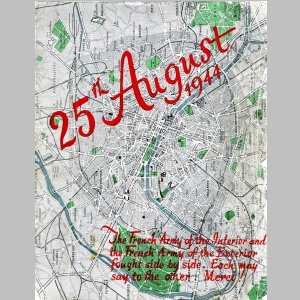
English magazine. Tells the story of the Liberation of Paris.
Scanned to text, 28 pages B&W, illustrated, undated. (6Mb)
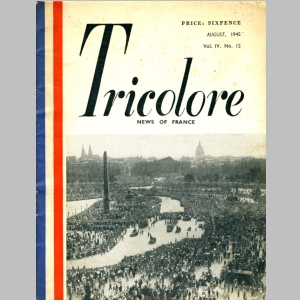
English monthly magazine giving news on the Free French movement.
Scanned to text, 30 pages B&W, illustrated, August 1945. (4Mb)
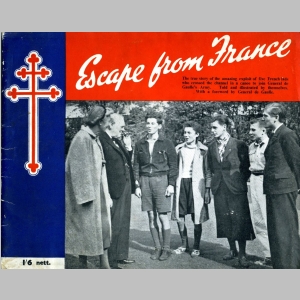
Bilingual English/French booklet. Cartoons tell a true story of joining the FFL.
Scanned to facsimile, 28 pages B&W, illustrated, undated. (8Mb)
English booklet. Introduces the Free French to the British public.
Scanned to facsimile, 28 pages B&W, illustrated, undated. (9Mb)
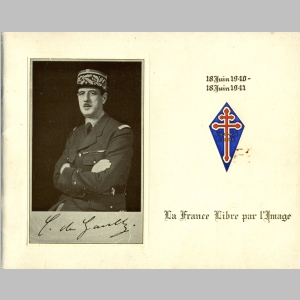
Bilingual English/français. Year one of the global activities of the FFL 1940/41.
Scanned to facsimile, 30 pages B&W, illustrated, 1941.(144Mb)
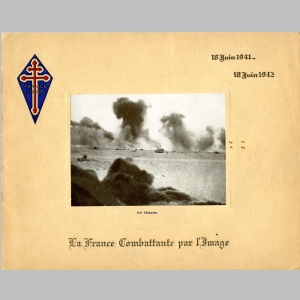
Bilingual English/français. Year two of the global activities of the FFL 1941/42.
Scanned to facsimile, 34 pages B&W, illustrated, 1942. (89Mb)
Not yet done.
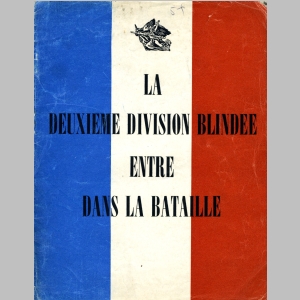
Brochure français. L'arrivée en Normandie de la 2me D.B.
Numérisé en facsimile, 16 pages illustré noir et blanc, pas datée. (6Mb).
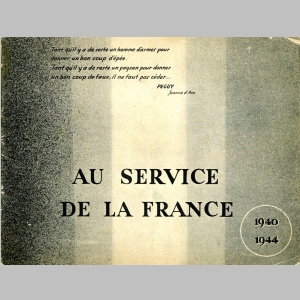
Not yet done. Brochure français decrivant quatre ans de la lutte de "France Combattant".
Numérisé en facsimile 62 pages illustré noir et blanc avec cartes en couleur, pas datée.
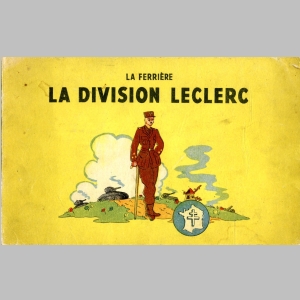
Brochure français pour les jeunes. Raconte l'histoire de général Leclerc.
Numérisé en facsimile 16 pages, bande desinée couleur, hiver 1944. (5Mb)
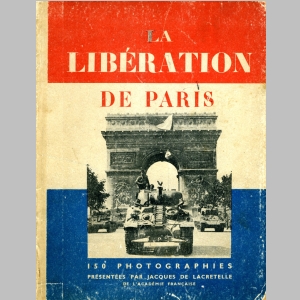
Not yet done.
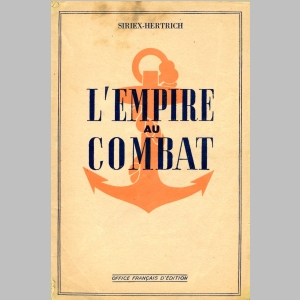
Numérisé en texte. Livre Français publié par Office Français d'Édition. 145 pages, beaucoup de photos en noir et blanc, 1945. (6Mb)
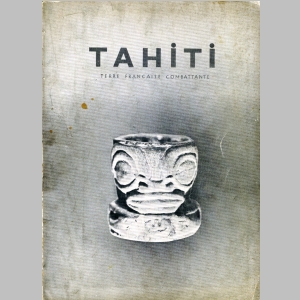
Livre Français publié par Publications de la France Combattante, Londres 1940.
Numérisé en texte 110 pages, avec cartes et photos en noir et blanc. (20Mb)
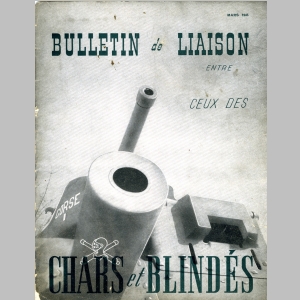
Not yet done.
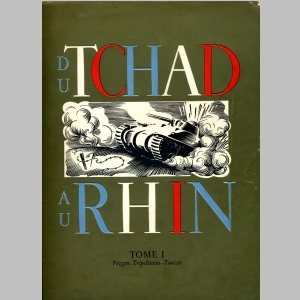
Reportage photographique des campagnes de Fezzan, Tripolitaine et Tunisie.
Numérisé en facsimile 63 pages illustré noir et blanc. (80Mb)

Reportage photographique de la Campagne d'Italie.
Numérisé en facsimile 79 pages illustré noir et blanc. (79Mb)
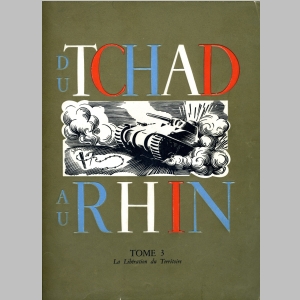
Reportage photographique de la libération du territoire.
Numérisé en facsimile 95 pages illustré noir et blanc. (97Mb)
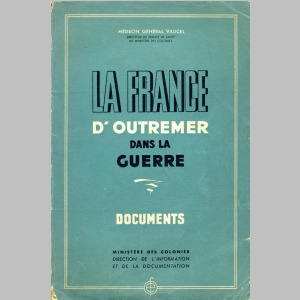
Transcriptions des déclarations juridiques originales et des télégrammes montrant la formation de la France combattante.
Numérisé en texte. Livre français publié par Office Français d'Édition 1945. 160 pages. (2Mb)
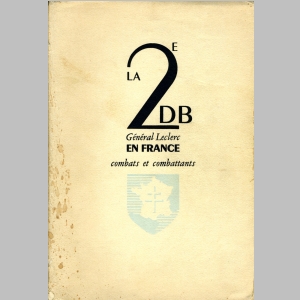
Not yet done.
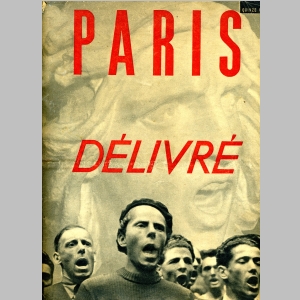
Not yet done.
Webmaster: marc@gastoneve.org.uk.